
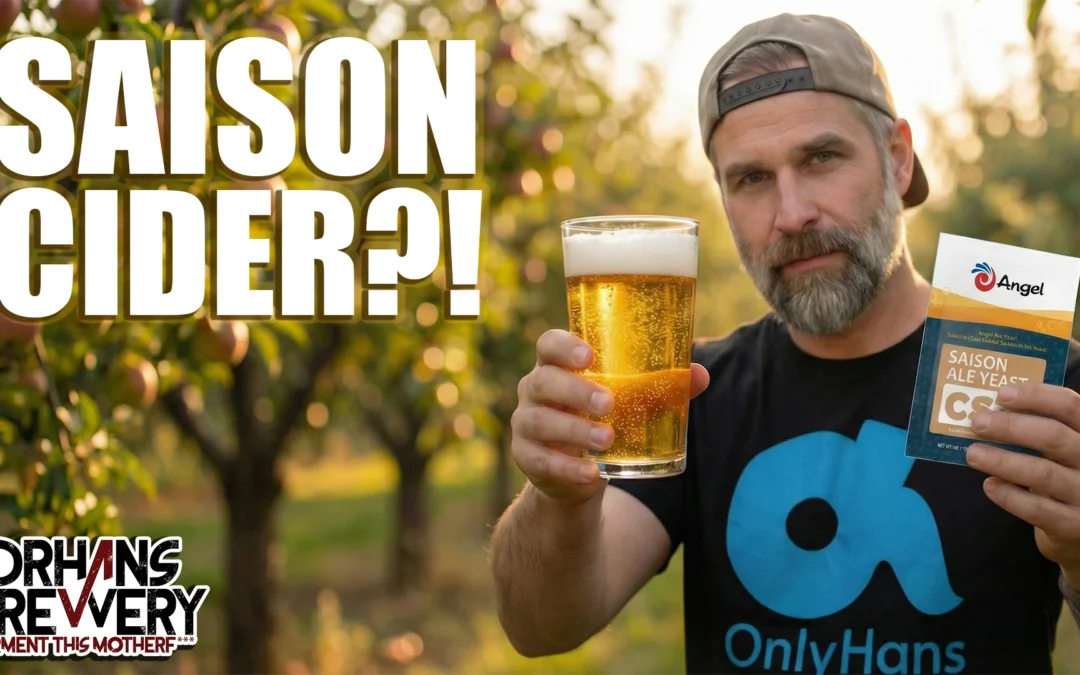
Brewing Hard Apple Cider with Saison Yeast: What Happens When You Use the “Wrong” Yeast?
Brewing Hard Apple Cider with Saison Yeast: What Happens When You Use the “Wrong” Yeast?
Sometimes the best brewing ideas start with a comment that makes you go, “That’s probably wrong… but also kind of brilliant.”
This one did exactly that.
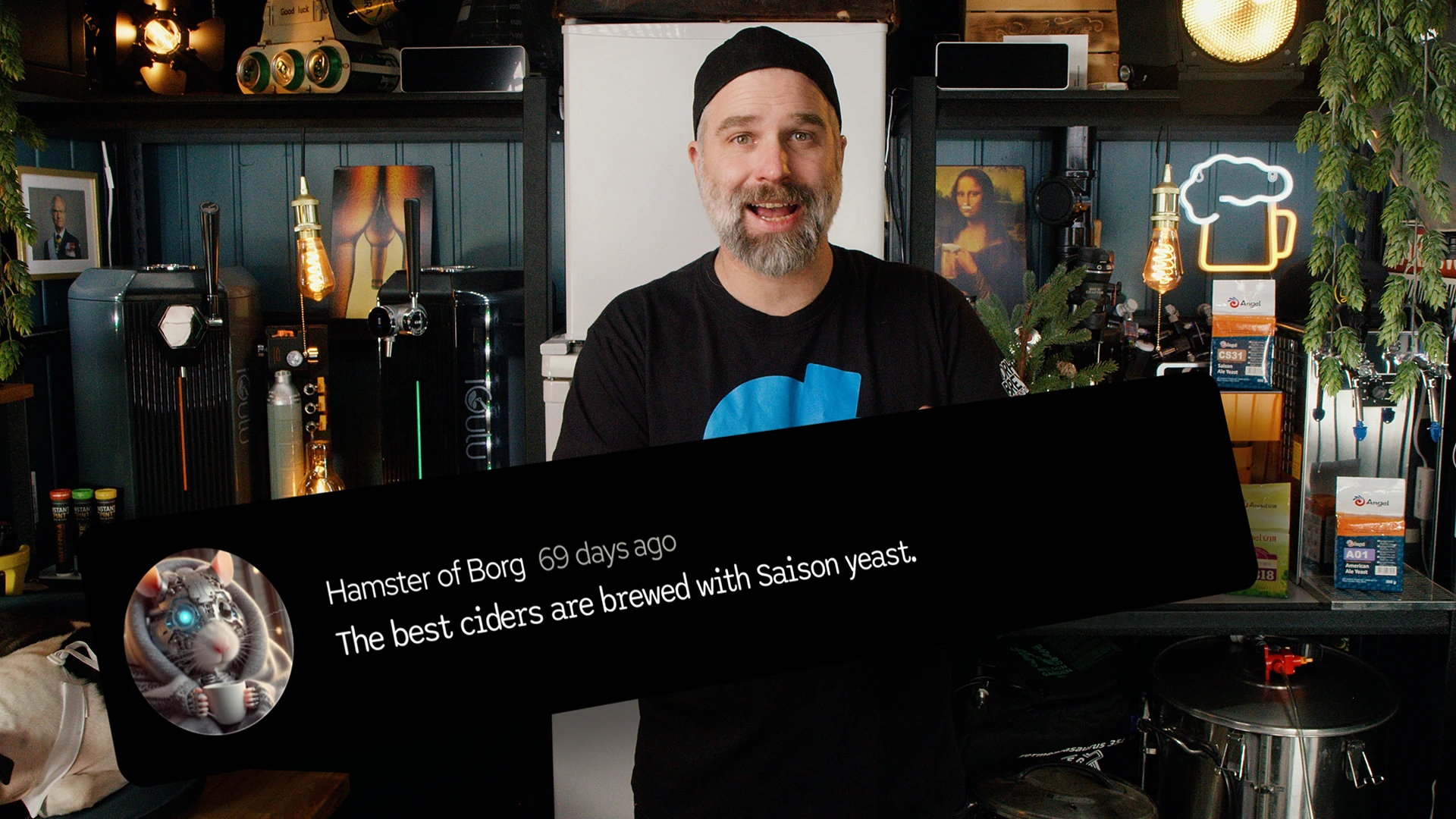
Hamster of Borg commented on one of my earlier videos that the best ciders he’d ever brewed were made with Saison yeast.
Instead of using a traditional cider or wine yeast, I fermented apple cider with Saison yeast — a yeast best known for farmhouse ales, peppery phenols, and a reputation for doing whatever it wants. Naturally, I had to try it.
I do these experiments so you don’t have to. Let’s kick it.
👉 Want to watch the full experiment instead?
You can see the complete brew day, fermentation details, and tasting here:
https://youtu.be/dKZfXCnBHAo
A Questionable Idea (That Was Too Interesting to Ignore)
In an earlier cider experiment, I fermented apple cider using an American ale yeast under pressure. The results were solid, clean, and predictable. Maybe even too predictable, one might say.
That batch, however, was part of a split experiment, with the other half fermented using my sourdough starter. In that context, safe and predictable felt like the right choice, in my humble opinion.
Then came the suggestion to use Saison yeast.
That immediately raised two questions:
-
Is that even a good idea?
-
What happens if we push Saison yeast hot and under pressure in cider?
There was only one way to find out.
Why Saison Yeast in Cider at All?
Saison yeast is usually associated with dry, highly attenuated farmhouse ales. It’s known for:
-
Wide temperature tolerance
-
Strong attenuation
-
Fruity esters and subtle spice
-
The ability to ferment just about anything
Cider, meanwhile, is often fermented cool with wine or cider yeast to preserve clean apple character. Saison yeast is… not that.
Which is exactly why it’s interesting.
The Cider Base: Juice, Volume, and Gravity
For this batch, I kept things simple and apple-forward.
-
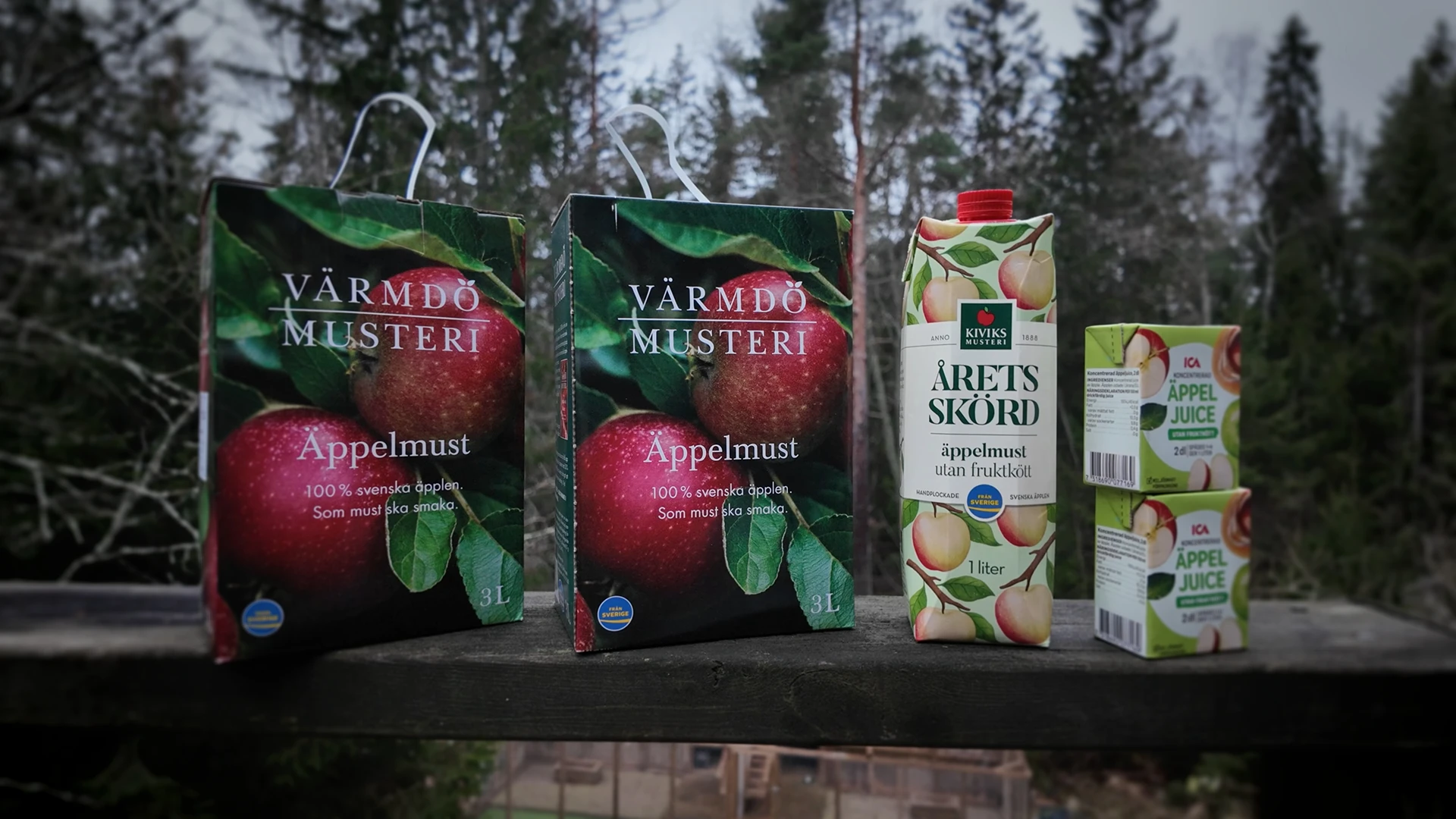
Fresh-pressed apple juice (Äppelmust)
-
No added sugar — only apples
-
Small batch size for control
Batch size
-
3.7 liters (1.0 gallon) per fermenter
I started with 3.5 liters (0.92 gallons) of apple juice, then boosted gravity using apple juice concentrate.
Gravity boost
-
200 mL (6.8 fl oz) apple juice concentrate
This brought the original gravity from 1.044 up to 1.055.
If you want a lower-ABV cider, skip the concentrate entirely. Apples alone do the job.
Yeast Choice and Fermentation Strategy
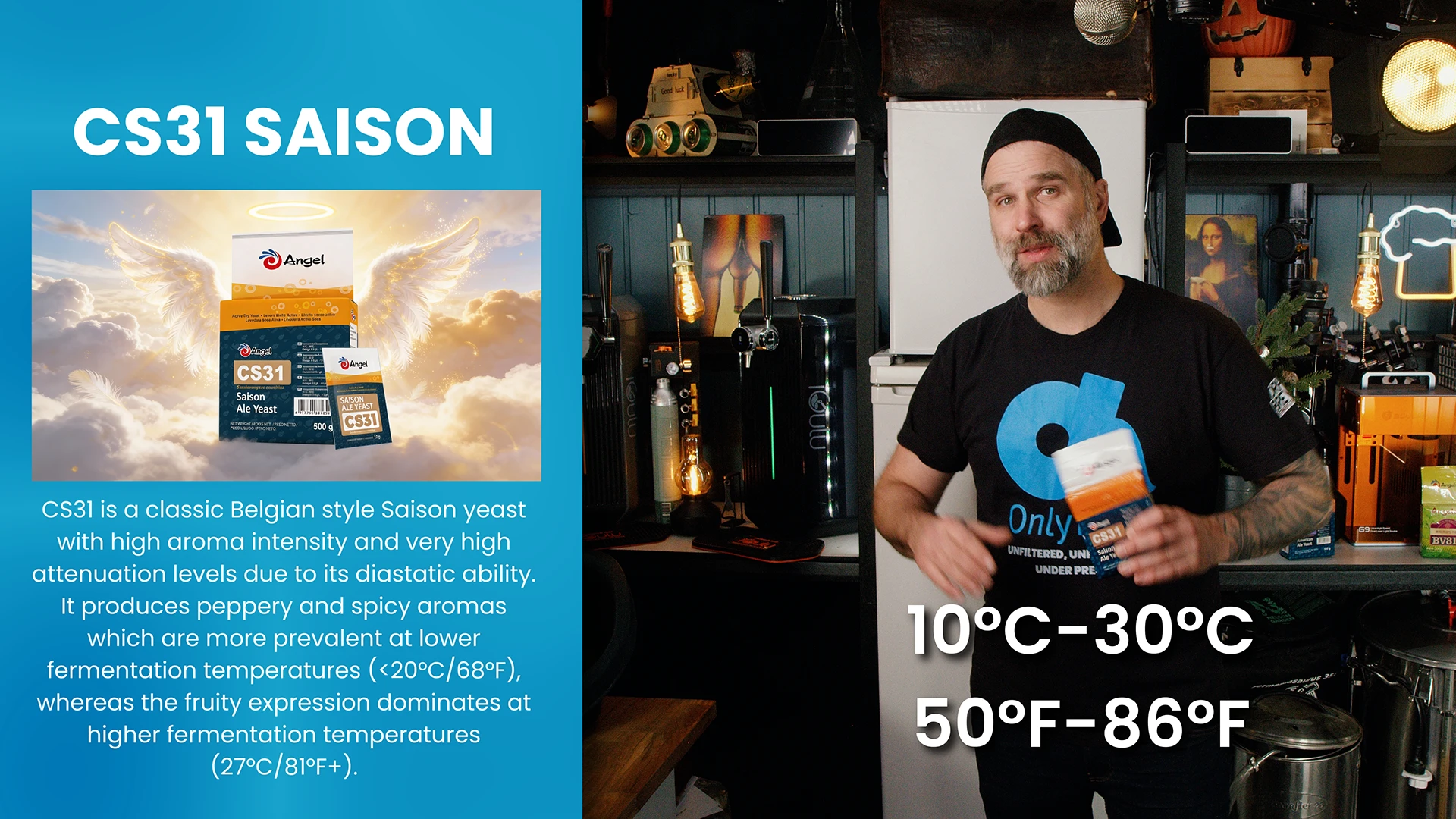
The yeast used was Saison CS31, which has a massive temperature range:
-
10–30°C (50–86°F)
At the lower end (meaning lower ale temperatures — fermenting Saisons at lager temperatures is an experiment for another day), Saison yeast can produce spicy, peppery notes. At higher temperatures, it tends to lean more fruity.
For cider, the goal was fruit-forward complexity, so the strategy was simple:
Ferment it warm.
To help the yeast in a low-nutrient environment like apple juice, I also added yeast nutrient, BrewNutri-Z. Cider isn’t wort, and yeast appreciates a little support.
🍺 Sponsor Shout-Out: Angel Yeast
This experiment — and the video it’s based on — was sponsored by Angel Yeast, who continue to support my slightly questionable brewing ideas.
If you’re curious about their full range of brewing yeasts (including cider, Saison, and other specialty strains), you can check them out here:
👉 https://bit.ly/Brewing-AngelYeast
Their support makes experiments like this possible, and it’s genuinely appreciated.
Fermenting Hot and Under Pressure
Both ciders were fermented under pressure at approximately:
-
22 PSI (~1.5 bar)
Pressure fermentation helps to:
-
Speed up fermentation
-
Reduce harsh alcohols
-
Maintain carbonation
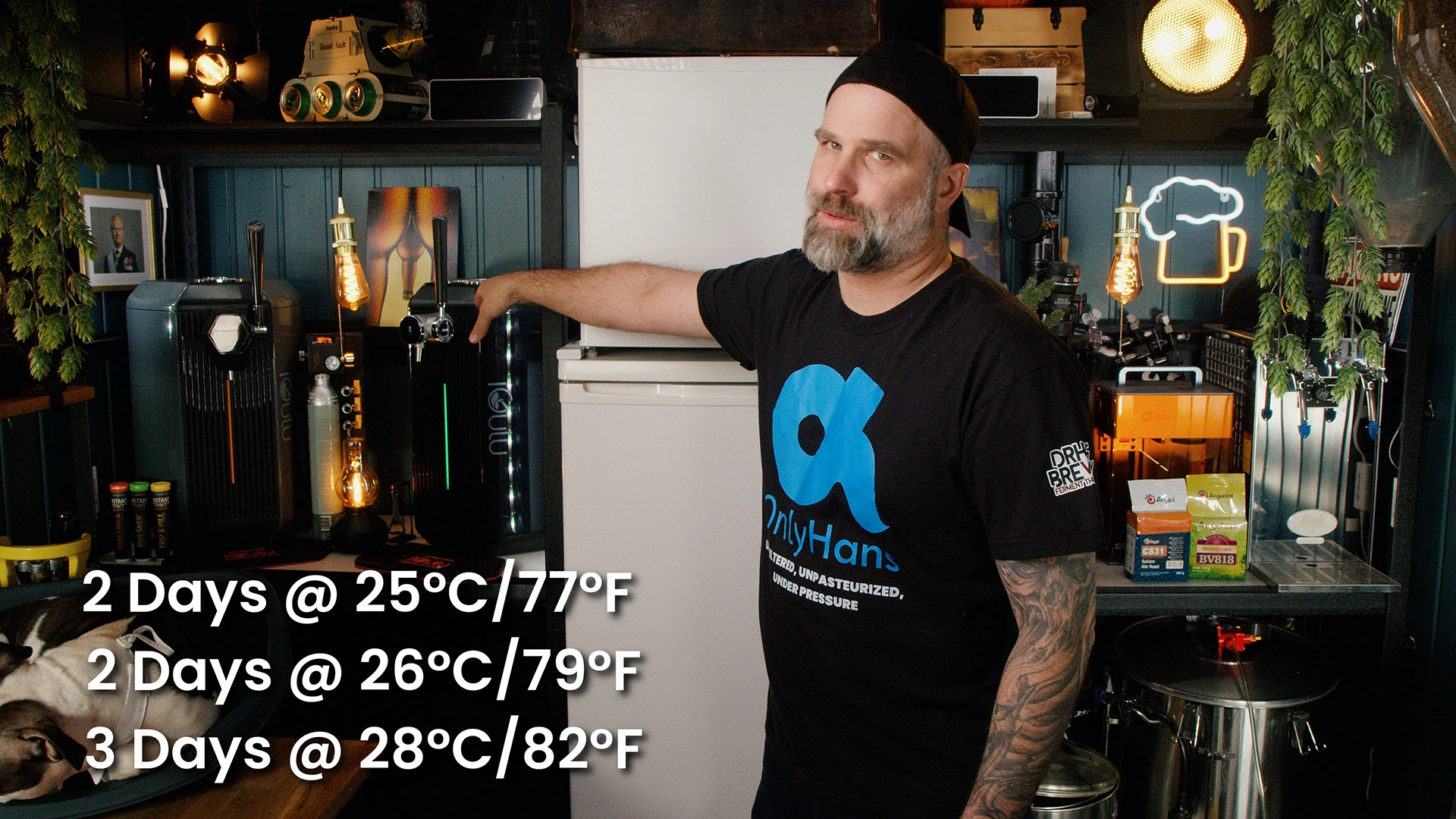
Temperature schedule
-
25°C (77°F) for 2 days
-
26°C (79°F) for 2 days
-
28°C (82°F) for 3 days
Fermentation activity was… enthusiastic. Saison yeast does not mess around.
Conditioning, Patience, and Letting It Settle
I did taste this cider very young — purely for science — in a less-than-serious video for the BrewCrew, aka OnlyHans supporters. But the version described here had:
-
30 days of conditioning
-
No fining agents
-
No filtration
Just time.
And patience.
The Numbers: Final Gravity and ABV
Saison yeast did what Saison yeast does best.
-
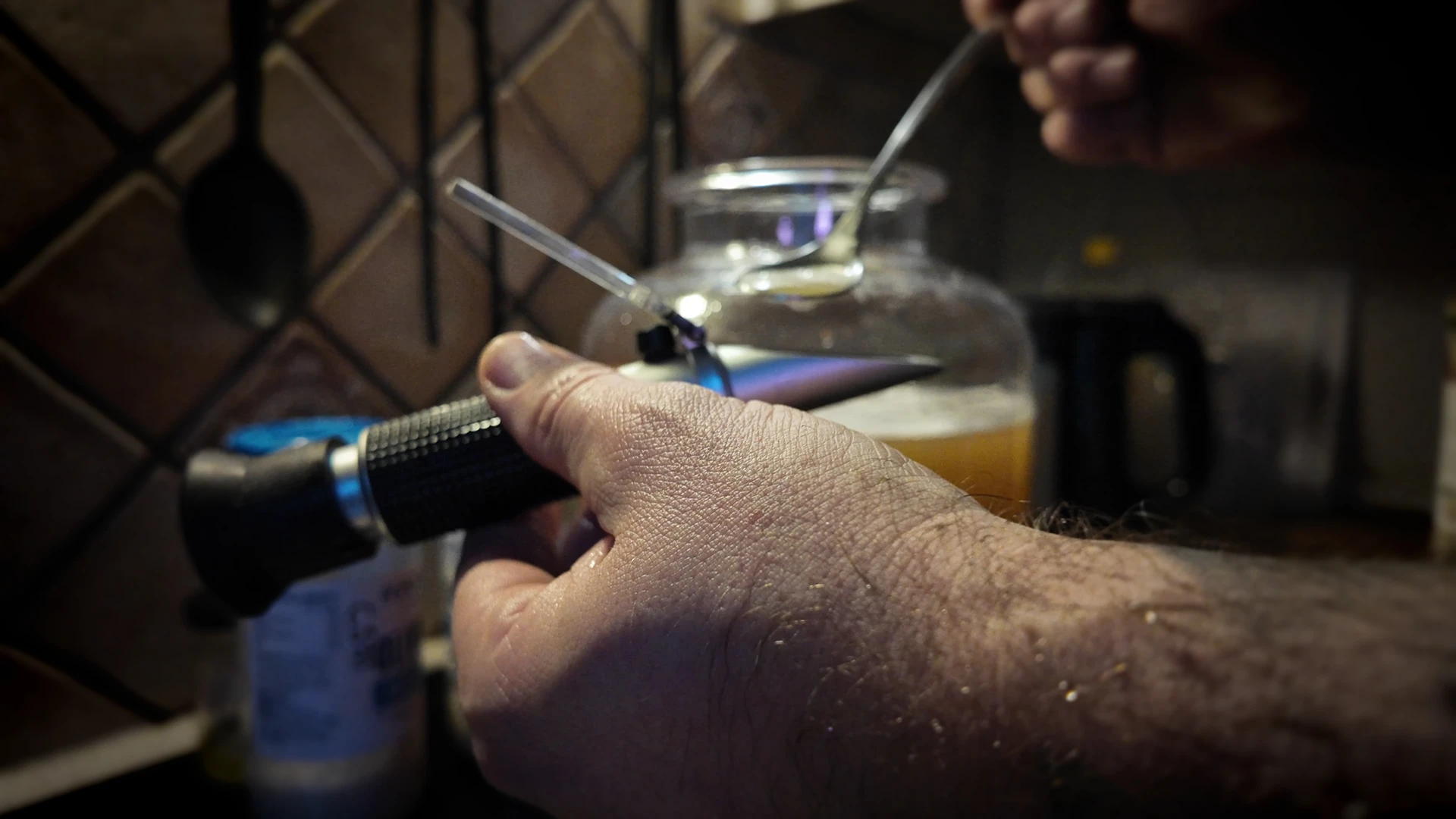
OG: 1.055
-
FG: 0.999
That puts the cider at roughly:
-
7.5% ABV
Bone dry on paper — but surprisingly nuanced in the glass.
Pour, Appearance, and Head Retention (Yes, Really)
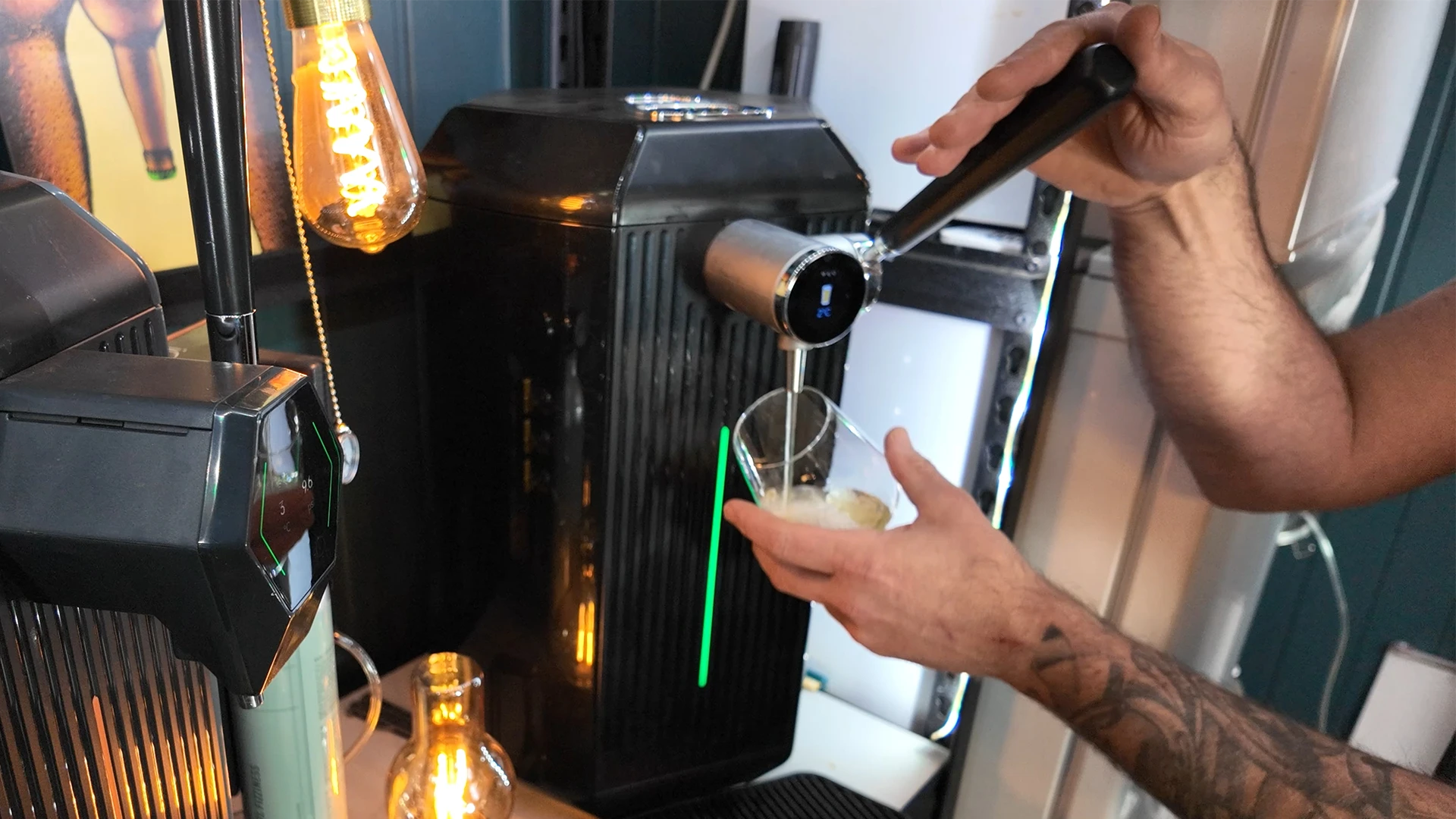
One of the biggest surprises?
Actual head retention on a cider.
-
Pale gold color
-
Almost clear, with a slight haze
-
High carbonation
-
A small but genuine white foam head
Everyone loves good head (yes, I’ve put that on a T-shirt). Even in cider.
Aroma and Flavor: What Saison Yeast Brings
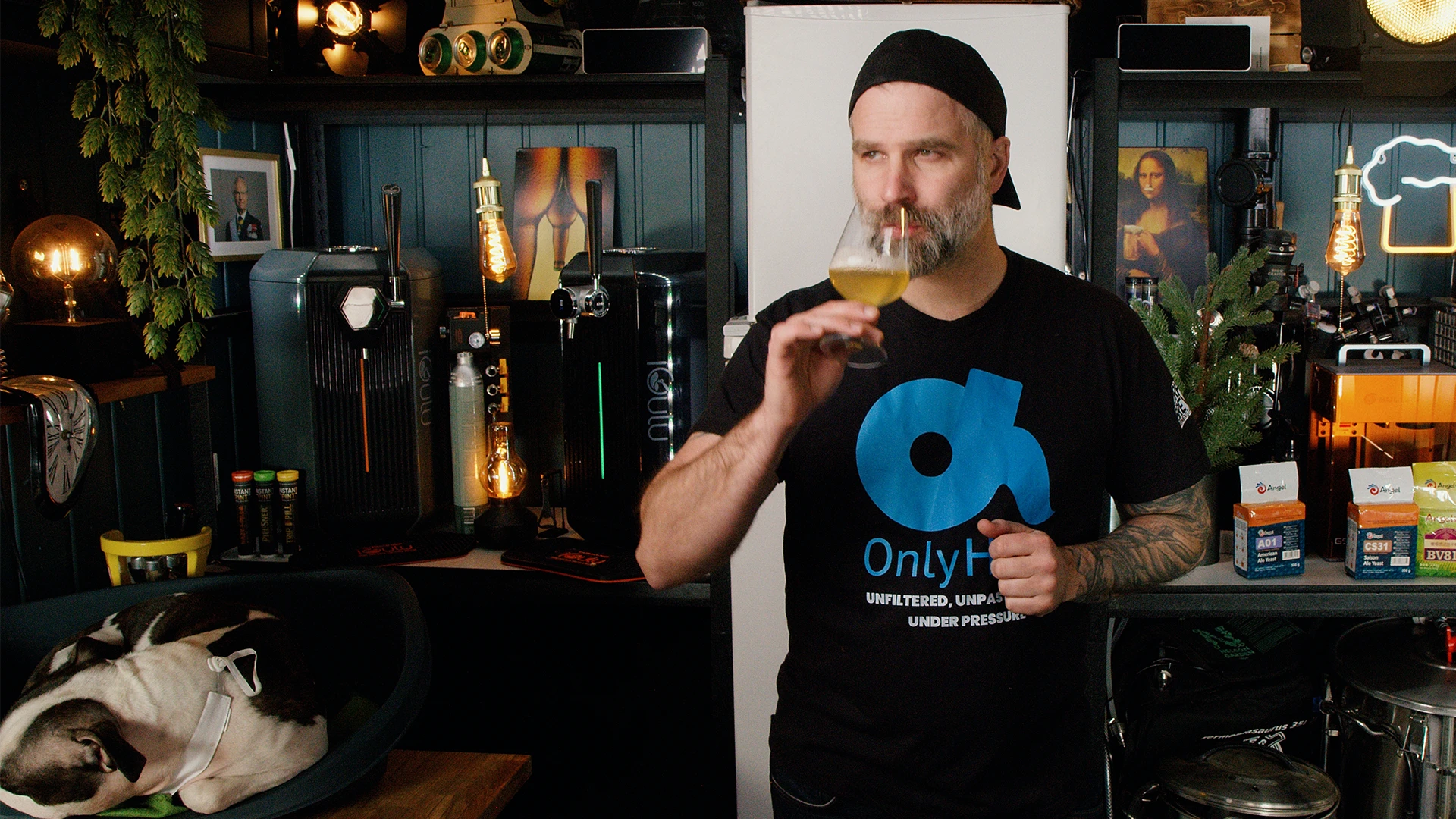
Aroma-wise, this goes beyond apples:
-
Extra fruit character
-
Low acidity
-
No off-aromas
On the palate:
-
Very dry, yet with perceived sweetness
-
Champagne-like carbonation
-
Apple plus… something more
It’s not beer.
It’s not traditional cider.
It’s something in between — and it works. It works surprisingly well.
Is Saison Yeast a Good Idea for Cider?
Saison yeast makes sense in cider if:
-
You like dry, complex fermentations
-
You enjoy experimenting outside style guidelines
-
You can control fermentation temperature
It’s probably not ideal if:
-
You want sweet cider
-
You prefer ultra-clean, wine-like profiles
This isn’t an accident. It’s brewing “wrong” on purpose.
Split Batch Comparison: What’s Next?
This cider was one half of a split batch.
The other half was fermented using a dedicated cider (wine) yeast.
Same juice.
Same gravity.
Different yeast.
Watch the video on the cider yeast version for the full story:
https://youtu.be/3XFeUAWuEzQ
Yeast matters more than most people think.
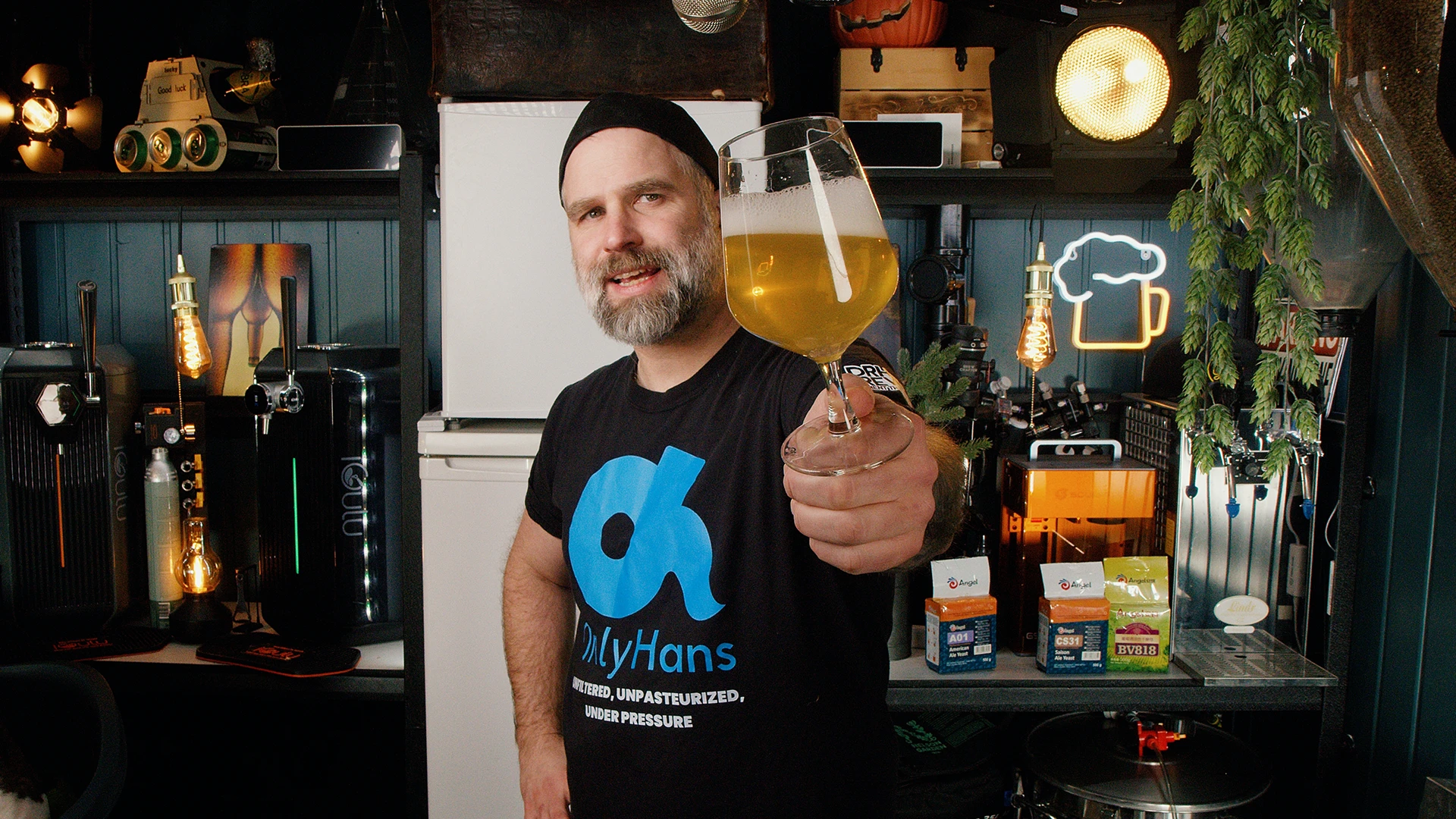
Brewing “Wrong” on Purpose
This experiment is a great reminder that brewing rules are often just starting points.
Sometimes the “wrong” yeast opens doors you didn’t even know were there. Saison yeast doesn’t just ferment cider — it reshapes it.
Will I do it again?
Let’s just say this one didn’t last long.
If you enjoy deep-dive experiments like this and want early tastings, behind-the-scenes content, or a way to support the channel, you can check out OnlyHans (aka Patreon) here:
👉 https://patreon.com/DrHansBrewCrew
DrHans out. 🍎🍺
Social Media and Contact Information:
Instagram: @drhansbrewery
Facebook: @drhansbrewery
Webpage: https://drhansbrewery.com
Contact Email: drhansbrewery@gmail.com
Support and Merchandise Links:
🔥 Get 20% Off iGulu Gear (Code: DRHAN20) 👉 https://igulu.com/?sca_ref=6679834.Gm6UfWKv2R
- 📚 Learn the art of homebrewing alongside me: https://solo.to/drhansbrewery
- 🛒 Check out the gear that elevates my brewing and video game on Amazon: http://bit.ly/drhanssf
- 📘 Grab your FREE brewing ebook on my website: http://bit.ly/DrHans
- 💰 Loved the blog? Buy me a virtual beer! https://bit.ly/ByMEaBEER 🍻 Cheers!
- Support my content on Patreon from just $2/month: https://bit.ly/2V5Zsgz
- 💼 Become a channel member for access to exclusive content: https://bit.ly/3fVQav7
- 🙏 Donate to DrHans via PayPal: https://bit.ly/DonateDrHans
- 👕 Check out my exclusive merch! Unique items await at my shop: https://bit.ly/DrHans-Merch

Recent Comments